How Long After Having A Positive Covid Test Are You Infectious
But some people may remain infectious for longer. If you are tested within 90 days of a positive PCR test result for any of these 3 reasons and the PCR test result is positive you must stay at home self-isolate and follow the stay at home.
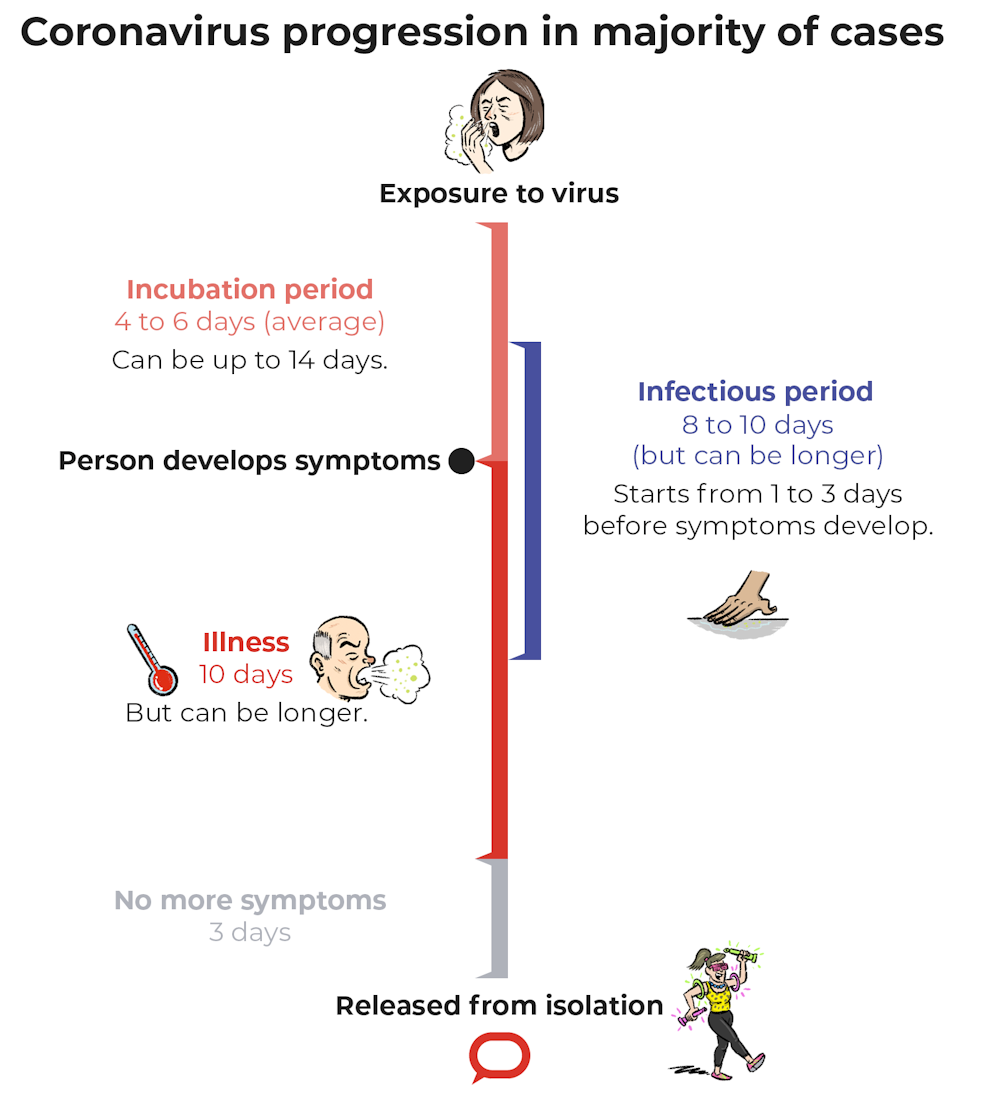
How Long Are You Infectious When You Have Coronavirus
Experts say right before developing symptoms is when.
How long after having a positive covid test are you infectious. Generally people are no longer contagious about 10 days after the onset of symptoms. I have symptoms of COVID-19. Now vaccinated people dont have to quarantine at all.
A recent study out of Beijing examined 16 patients with COVID-19 and found that half continued to test positive even after their symptoms such as cough and fever ended. If we test positive on a PCR test but negative on an antigen test then its likely that we are not infectious and have just residual virus RNA. However there are guidelines to advise people on how long to isolate.
You reach for one of those lateral flow tests LFT youve got stashed away just to check it is not Covid. As health experts learn more about COVID-19 remember its only been around for about seven months theres evidence that suggest people are no. A person with COVID-19 is considered infectious starting 2 days before they developed symptoms or 2 days before the date of their positive test if they do not have symptoms.
Get PCR a test to check if you have COVID-19 on GOVUK if you get symptoms while youre self-isolating. If your test is negative keep self-isolating for the rest of the 10 days. In other words although being infectiouscontagious means being a carrier being a carrier doesnt always.
Also RNAs generally have a short life most only stick around for a few minutes so it was unlikely for positive tests to be the result of residual RNAs. Isolate for at least 10 days after first positive test. If it returns a single.
Self-monitor daily for symptoms through Day 14. People are not likely to be contagious for that long even if they test positive and therefore are unlikely to transmit the virus to others. I am a close contact.
For someone with a. Now a new paper from the lab of Whitehead Institute Member and MIT professor of biology Rudolf Jaenisch may offer an answer to why some patients continue to test positive after recovery from COVID-19. Get tested again 5-7 days after the end of isolation for the most recently infected member of the household.
You wake up with a pounding head sore throat and runny nose. A CDC report published in July found that 35 of people who tested positive and had symptoms said they had not reverted back to their usual health state. Those who test positive develop symptoms or.
How long COVID-19 stays in the body varies from person to person. Most of us now believe these individuals are not infectious even though they continue to test positive and are being held out of work The CDC appears close to reaching the same conclusion noting that detecting viral RNA via PCR does not necessarily mean that infectious virus is present. The policy used to be 14 days of solitude for everyone.
How long a person with COVID-19 is contagious will vary. The infectious period only starts a few days after being exposed to the COVID-19 virus. Those patients had markers of shedding indicating they could still spread the.
Isolate for at least 10 days after symptom onset and until fever free for at least 24 hours. Someone can get a positive COVID-19 test result as soon as two days after exposure but we typically ask our patients to wait at least five days for most accurate test results Nailah. The CDC advises that asymptomatic people can be around others 10 days following their.
Unfortunately many people can test positive for COVID-19 for weeks or even months but there is good news. Quarantine for at least 10 full days from last potential exposure. A recent study found that people can be shed the virus for as long as 83 days underscoring the importance of frequent testing quarantining and isolation practices.
And its not yet known how infectious a person may be in the recovery phase warn the researchers. Studies have shown that people may be contagious for about two days before developing COVID-19 symptoms. Fully vaccinated people in England who are close contacts of Covid cases will be told to take daily lateral flow tests for seven days from Tuesday.
If you dont have COVID-19 symptoms but tested positive. The most infectious period is thought to be 1 to 3 days before symptoms start and in the first 7 days after symptoms begin. Even the unvaccinated can peace out at 10 days or even seven if they produce a.
This is because SARS-CoV-2 the virus responsible for COVID-19 infection takes an average of 30 days to clear from the body after the first positive test result and an average of 36 days after symptoms first appear the study findings show. If your test is positive the 10 days restarts from the day after your symptoms started. Those who test positive but do not have any symptoms should isolate for 10 days after their initial positive test result.
The agency states that someone with a mild or moderate case of COVID-19 stops being infectious no more than ten days after symptoms start.
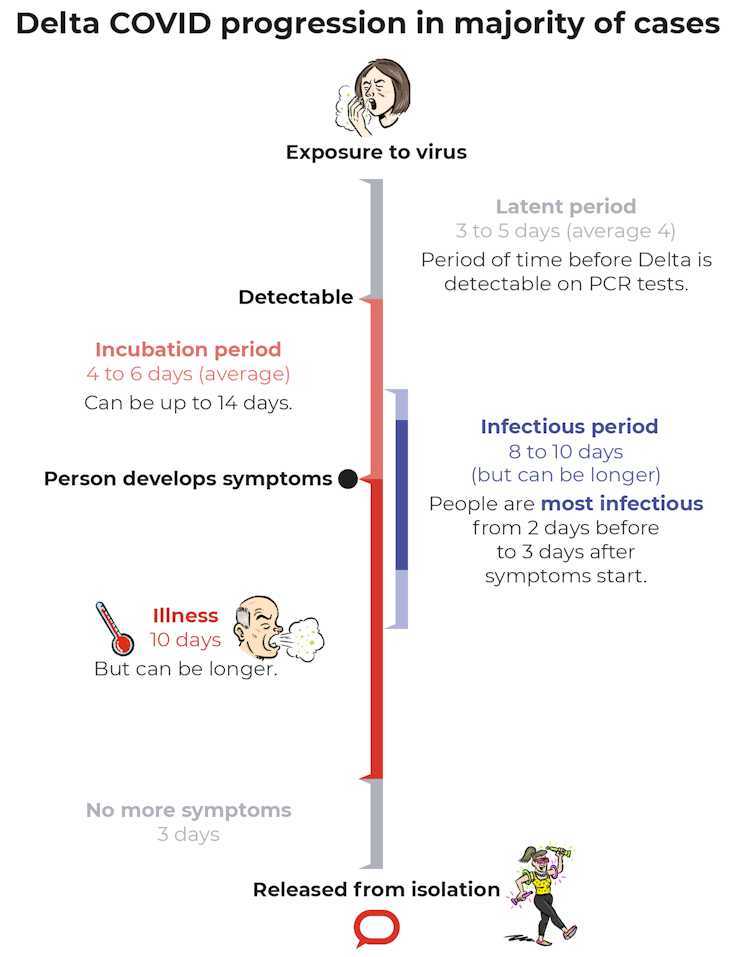
How Contagious Is Delta How Long Are You Infectious Is It More Deadly A Quick Guide To The Latest Science
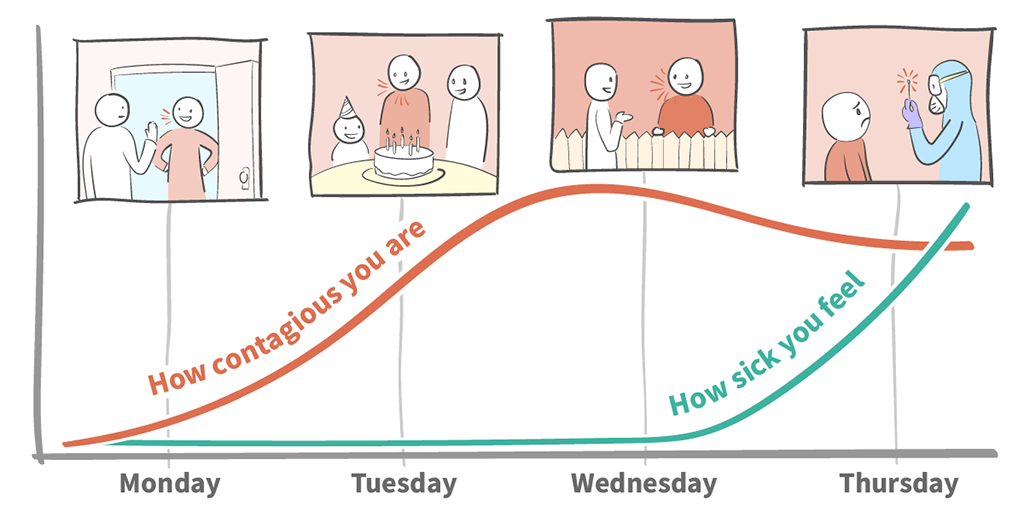
How Long Before Symptom Onset Is A Person Contagious Mit Medical

What To Do If You Test Positive For Covid 19 Vermont Department Of Health
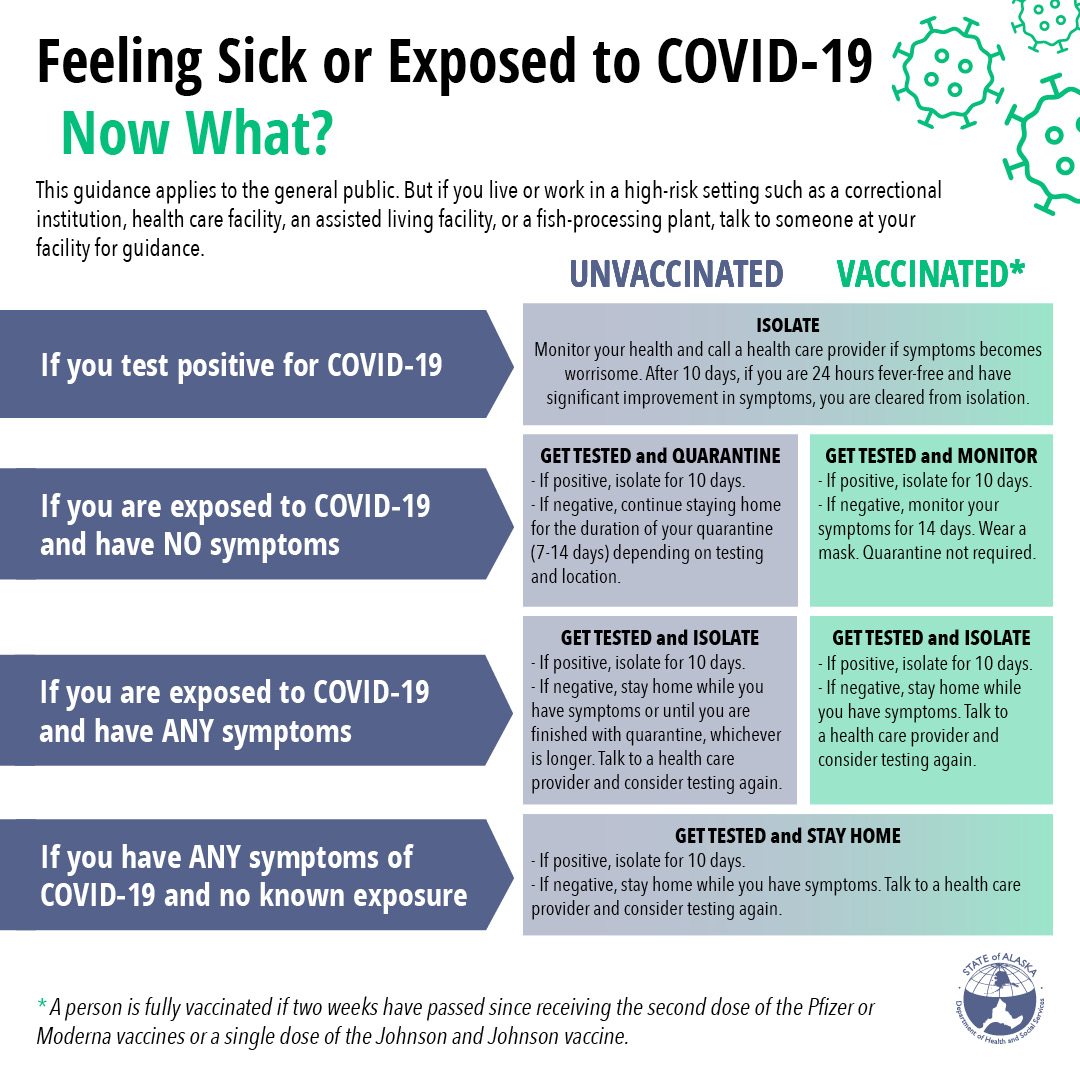
Alaska Department Of Health And Social Services

Posting Komentar untuk "How Long After Having A Positive Covid Test Are You Infectious"